Test & Measurement
Reading a multimeter spec: true-RMS and CAT ratings
A cheap meter and an expensive meter can both show four digits. What separates them is how they behave on a distorted waveform and how much fault energy they can survive, and those are the two lines worth reading first.
True-RMS versus averaging
An averaging meter assumes the signal is a clean sine wave and scales its reading on that assumption. Feed it the chopped waveform from a variable-speed drive, an LED driver or a switch-mode supply and it reads low, sometimes badly low.
A true-RMS meter measures the actual heating value of the waveform whatever its shape. Today most loads are not clean sine waves, so true-RMS is the sensible default for anything past basic battery checks.
CAT ratings are a safety spec, not a range
The CAT rating (CAT II, III or IV) describes the transient energy the meter can survive at a given location in the electrical system, not just the voltage on the dial. A CAT III 600 V meter is built to take a bigger fault spike than a CAT II 1000 V meter, even though the voltage number is lower.
Match the CAT rating to where you work: CAT II at the socket and inside equipment, CAT III at distribution boards and fixed wiring, CAT IV at the service entrance. Using an under-rated meter on a high-energy circuit is how meters explode.
Counts, resolution and the extras that matter
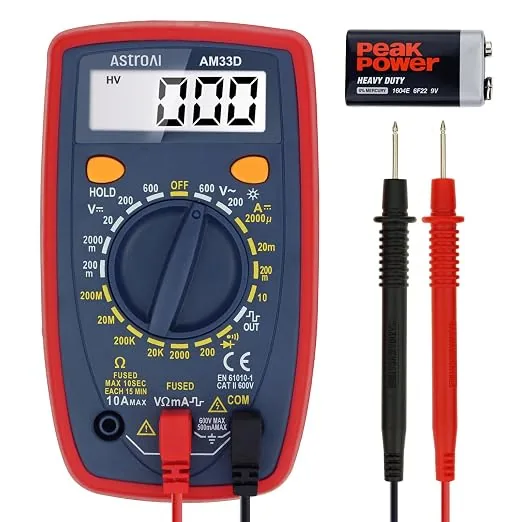
Count is the biggest number the display shows: a 6000-count meter reads to 5999. More counts means finer resolution, which matters for small differences but not for a go/no-go check.
- General maintenance: a true-RMS handheld, CAT III rated, 6000 count.
- Around motors and drives: true-RMS is not optional; add a clamp for current.
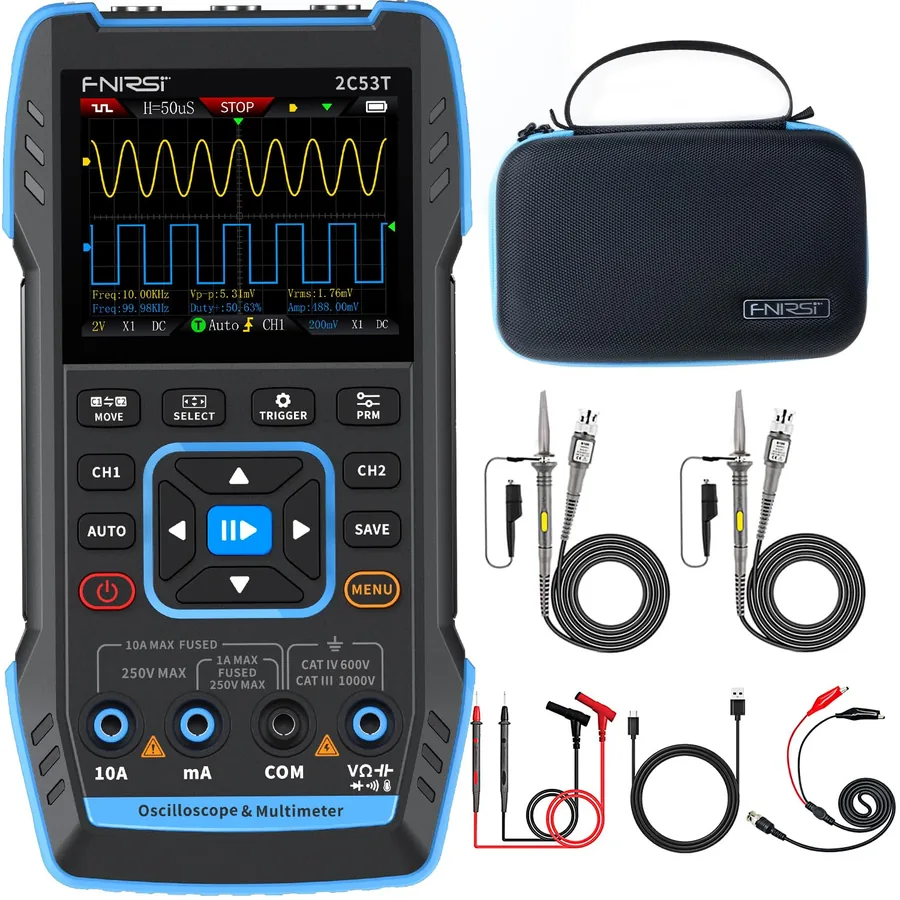
- Bench and hobby electronics: resolution and a scope view help more than CAT IV.
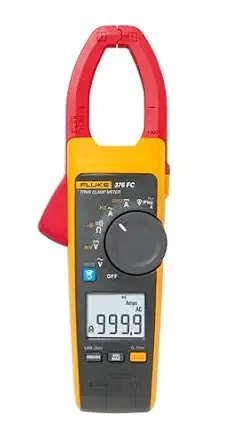
- Awkward panels: a clamp meter with a flexible current probe reaches where a jaw will not.
When a scope beats a meter
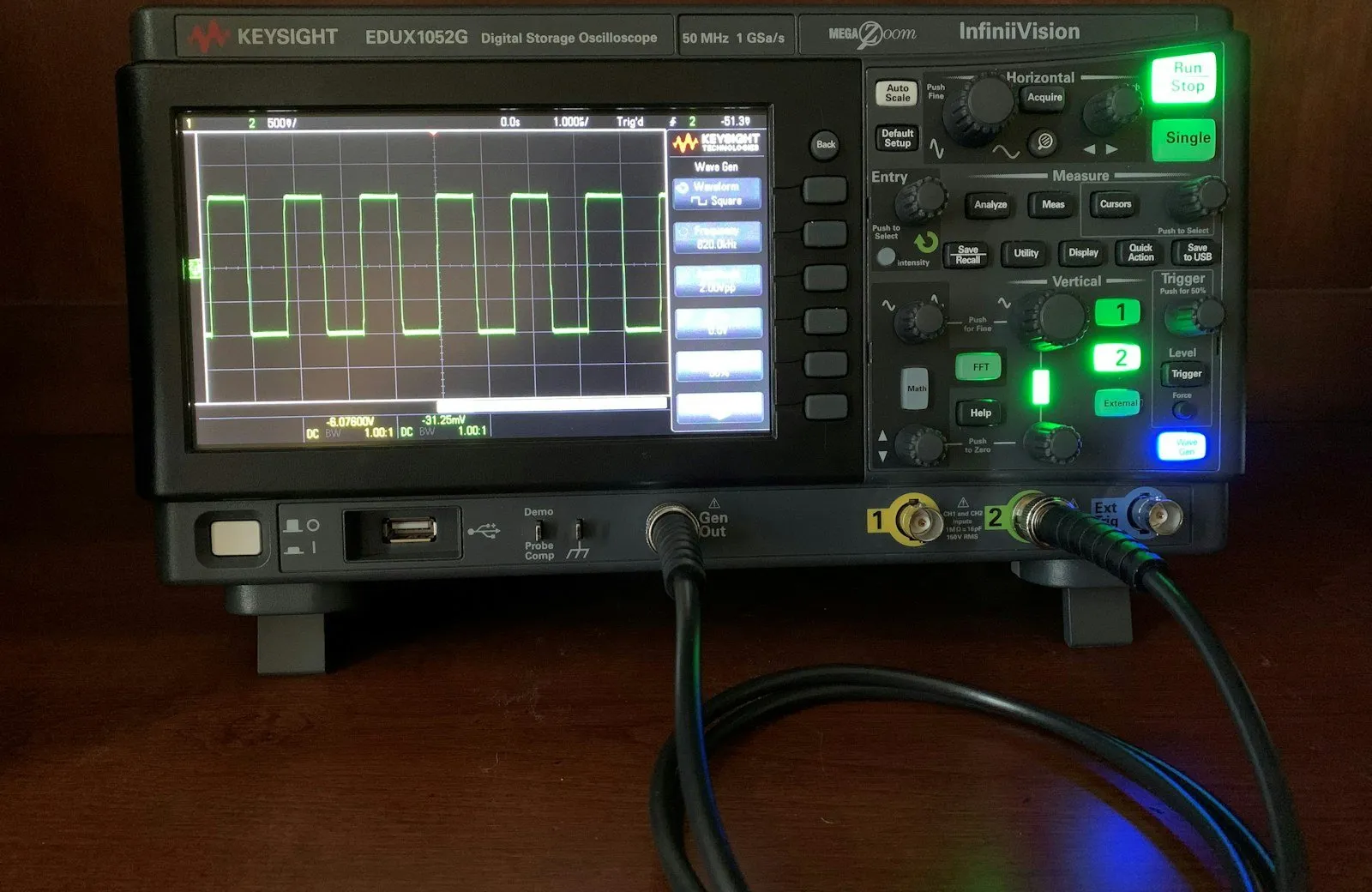
A number tells you the level; it never shows you the shape or a glitch that comes and goes. For anything intermittent, a handheld oscilloscope earns its place by showing the waveform a meter can only average away.
How we write these. Guides are written by the people who pick and specify this gear. We sell the products mentioned, and we say so, but where the honest answer is that a cheaper product does the job, that is what the guide says. If you think something here is wrong, tell us at support@exelproddistribution.com and we will correct it and note the change.